Puddle Under the Fridge Every Few Days? Tracking Down a Slow Refrigerant or Drain Leak
Quick Answer: A puddle that keeps forming under a refrigerator is almost always a water problem, not a refrigerant problem. The most common cause is a frozen or clogged defrost drain, followed by a loose or cracked water line, an overflowing drain pan, or a fridge that is not sitting level. True refrigerant leaks are rare in a sealed cooling system and usually show up as warm food, a hissing sound, or an oily residue near the coils rather than a puddle on the floor. Standing water left for more than 24 to 48 hours creates the conditions mold needs to start growing, according to the EPA, so finding the source quickly matters. Most of the common causes can be checked in under 15 minutes without any tools, though a cracked drain pan or a failed water inlet valve usually calls for a replacement part.
You find the same wet patch on the kitchen floor every few days. You dry it up. It comes back before the week is out. That pattern is actually a clue. A leak that returns on a cycle, rather than one steady drip, points to something tied to how the fridge cools and defrosts itself, not a sudden failure. Before assuming the worst, it helps to know what a water leak looks like next to the much rarer case of a true refrigerant leak, then work through the handful of parts that cause nearly every puddle.
Water Leak or Refrigerant Leak: Why the Terms Get Mixed Up
Homeowners often use "refrigerant leak" as a catchall for any fridge problem involving liquid, but the two issues behave nothing alike. Refrigerant runs through a sealed loop of tubing and the compressor. It never mixes with the food compartment or drips onto the kitchen floor during normal operation. When a sealed system does lose refrigerant, the signs look different: a fridge that runs constantly but never gets cold, a faint hissing or bubbling sound behind the unit, uneven frost patterns across the coils, or an oily residue at a fitting. That kind of leak is a compressor and refrigeration issue. It calls for a licensed technician, since recovering and recharging refrigerant requires certification and specialized equipment.
What You Are Far More Likely Looking At Instead
A puddle under the fridge is condensate water. It comes from the automatic defrost cycle, the water supply line feeding an ice maker or dispenser, or ordinary condensation that formed somewhere it shouldn't have. Every frost free refrigerator runs a defrost heater a few times a day to melt the thin layer of frost that builds on the evaporator coil. That melted water is supposed to travel down a drain tube into a pan underneath the unit, where it evaporates using heat the compressor gives off. Block or damage that path anywhere along the way, and the water ends up on your floor instead.
The Defrost Drain Is the Most Common Suspect
Nine times out of ten, this is where the trail leads.
How It Clogs
Food particles, grease, and general debris that make their way to the back of the freezer can wash down into the drain tube during a defrost cycle and freeze there. Or the tube itself accumulates a plug of ice if warm household air keeps sneaking into the freezer compartment. Once that tube is even partly blocked, the next defrost cycle has nowhere for the water to go except back up and out onto the freezer floor, which then travels forward and drips out the front of the unit.
What It Looks Like When This Is The Cause
Water tends to show up inside the freezer first, pooling under the bottom drawer or around the back wall, before it ever reaches the floor outside the fridge. The leak often follows the fridge's own defrost schedule. That's why it seems to show up "every few days" instead of constantly.
Clearing It
Find the drain opening, usually a small hole in the back wall of the freezer or underneath a removable panel, and flush it with a cup of warm water using a turkey baster or similar tool. If the water backs up rather than draining through, a flexible line, pipe cleaner, or short length of aquarium tubing can clear the remaining ice or debris. Manufacturers including GE and Whirlpool publish model specific defrost drain locations in their owner's manuals, since placement varies by model line.
A Water Line Feeding the Ice Maker or Dispenser
If your fridge has an ice maker or a door mounted water dispenser, a thin plastic or copper line runs from a shutoff valve near the kitchen sink or basement to a connection point on the back of the unit. That line, plus every fitting along it, is a second common source of a floor puddle, and it has nothing to do with the defrost system at all.
Loose Fittings
Vibration from normal use can work a compression fitting slightly loose over months of service. A small drip at that connection often travels along the floor before it pools somewhere visible, which makes the actual leak point hard to spot at first glance.
A Cracked Line
Pulling the fridge away from the wall to clean behind it, or during a move, can kink or crack the supply line without you noticing right away. A kinked line under pressure eventually splits.
The Inlet Valve Itself
The water inlet valve controls flow into the line and can develop an internal leak that lets water seep through even when nobody is filling a glass or making ice. It's a low cost part to replace once you've found it. But it sits behind the fridge, and swapping it usually means shutting off the water supply and disconnecting the line, which is a fair point to hand off to a technician if working around a pressurized connection isn't something you want to deal with.
The Drain Pan Underneath the Unit
The drain pan sits beneath the fridge and catches the condensate that makes it through the drain tube, holding it until warmth from the compressor evaporates it away. It's designed to handle this job quietly for the life of the appliance. Two things send it wrong.
Damage
Plastic pans get brittle with age and can crack from a bump during cleaning or a move. Once cracked, water passes straight through to the floor instead of collecting and evaporating.
Overflow
A pan that's too full, whether from unusually high humidity or a drain tube pushing through more water than usual, simply spills over the edge. Pulling the pan out from underneath the front grille, checking it for cracks, and wiping it clean takes only a few minutes and rules this cause in or out fast.
Unplug the refrigerator before you reach underneath it. The compressor, condenser fan, and electrical connections back there aren't meant to be handled while the unit is powered.
An Unlevel Fridge Sends Water in the Wrong Direction
Refrigerators are built to sit tilted back very slightly, generally about a quarter inch higher in front than in back. That tilt does two jobs: it lets the door swing shut under its own weight, and it sends the drain pan and defrost water where the design intends. A fridge that has drifted out of level, often after flooring work, a move, or just settling over time, can send condensate toward the front of the unit instead of into the pan. From there it drips out onto the floor right where you keep finding it.
Tip: Set a bubble level on the floor of the refrigerator, front to back and side to side, then adjust the front leveling legs or rollers until the fridge sits level side to side and tilts back very slightly. Most models access these adjustments by pulling off the bottom grille, and the tools needed are usually just a wrench or a flathead screwdriver.
Door Seals, Condensation, and High Humidity
A worn or poorly seated door gasket lets warm, moist kitchen air into the cold cabinet every time it fails to seal completely. That moisture condenses on cold interior surfaces and can build up faster than the drain system was ever meant to move it, especially in a kitchen that already runs humid from cooking or a lack of ventilation.
Checking The Seal
Close the door on a piece of paper or a dollar bill at several points around the frame. If it slides out with little resistance, the gasket has lost its grip and moisture is likely getting past it. Gaskets can often be cleaned and reseated, but a torn or permanently deformed one needs replacing to restore an even seal.
Home Humidity Plays A Role Too
Kitchens with poor exhaust ventilation, a dishwasher running nearby, or a home that just generally runs humid push more moisture into the fridge every time the door opens. That shows up as extra condensation and a fuller drain pan even when every part is working the way it should.
But standing water on a kitchen floor is more than an inconvenience. The Environmental Protection Agency notes that materials staying wet for 24 to 48 hours after a leak or spill create the conditions mold needs to take hold, and once that window passes, cleanup often turns into a bigger job than the original leak ever was. That's the real reason a slow, recurring puddle deserves attention now instead of a mop on rotation.
Warning: Water pooling near an appliance that is plugged into a wall outlet carries a real shock and short circuit risk. Unplug the refrigerator before you inspect, clean, or reach behind or underneath it, and keep the area dry while you work.
When a Slow Leak Signals a Bigger Repair
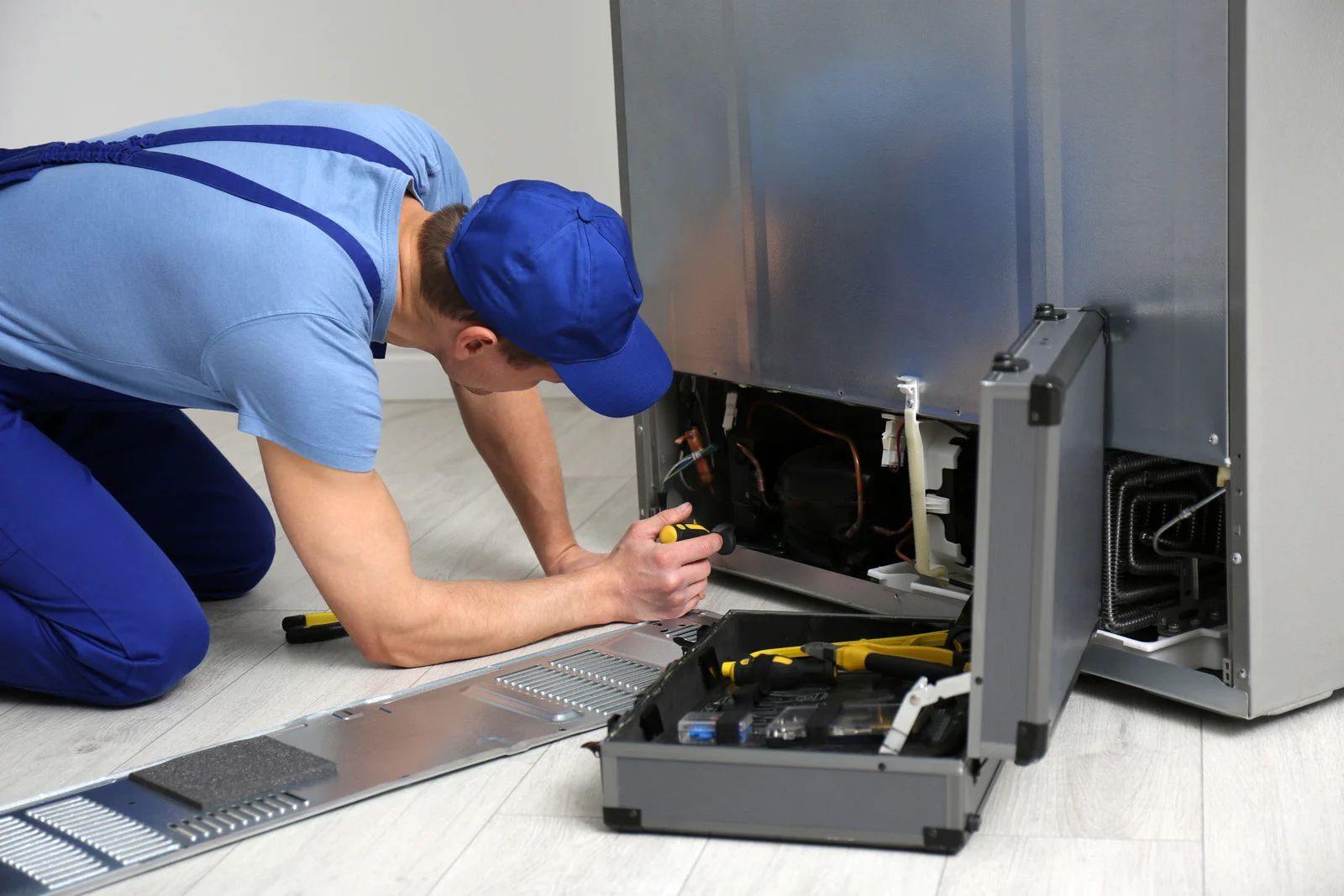
Most of the causes above can be checked and often fixed with basic tools and maybe fifteen minutes of your time. A few situations are worth handing off instead of troubleshooting further on your own. Water coming from directly behind the compressor. A fridge that has stopped cooling properly on top of leaking. Frost built up unevenly across the back wall of the freezer. A leak that keeps returning after you have already cleared the drain and checked the water line. Any of those point to something deeper in the system, whether that's a failing defrost heater, a bad thermostat, or in rare cases the sealed refrigerant system itself. At that point, a technician with access to [professional refrigerator repair](https://www.anyappliance.pro/refrigerators) tools can pressure test the system, check the sealed components, and tell you whether the fix is a part swap or something bigger.
A fridge is not disposable at the first sign of trouble, either. Department of Energy efficiency data puts the average service life of a standard size refrigerator at roughly 14 years, and other industry life expectancy studies place well maintained units in the 9 to 13 year range or longer. A unit with one isolated drain or water line problem still has plenty of life left in it once that single part gets fixed.
Frequently Asked Questions
Is a refrigerator leaking water on the floor dangerous?
Yes, in two ways. Water near a plugged-in appliance is a shock and short circuit risk, so unplug the fridge first. Standing water for a day or two invites mold growth nearby.
How can I tell if my fridge has a water leak or a refrigerant leak?
A water leak shows up as a visible puddle inside the freezer or on the floor. A refrigerant leak instead shows constant running, a hissing sound, or oily residue, with no puddle at all.
Can I clear a clogged defrost drain myself?
In most cases, yes. Locate the drain opening in the freezer's back wall, flush it with warm water using a turkey baster, and clear debris with a pipe cleaner or flexible tubing.
Why does my fridge only leak during humid weather or after I run the dishwasher?
Higher humidity means more moisture enters the fridge each time the door opens, filling the drain pan faster and stressing the door gasket's seal, especially during heavy cooking or dishwasher use.
How often should I check the drain pan and water line for problems?
A quick visual check every few months is enough for most households. Pull the front grille, inspect the pan for cracks or standing water, and check water line fittings for corrosion.
Should I unplug the refrigerator before I start looking for the leak?
Yes. Unplug it before reaching underneath, behind, or into any panel near the compressor or electrical connections. A closed fridge keeps food cold safely during a short inspection.
Tracing the Leak Before It Becomes a Bigger Fix
Most puddles under a refrigerator trace back to one of a handful of familiar culprits: a clogged defrost drain, a loose water line, a cracked pan, or a door seal that no longer holds tight. None of these point to a failing appliance. They point to one small part doing its job poorly, and once that part is identified, the fix is usually quick. Catching the pattern early keeps a minor nuisance from turning into water damage or a bigger repair down the line.
Any Appliance Care & Repair
has spent 10
years tracing these leaks back to their source for households across Lakewood, CO. A recurring puddle rarely means the fridge itself is failing. It usually means one part along the drain or supply path needs attention, and pinpointing that part early is what keeps a small fix from turning into a larger one.